Product released:
iPadOS app
Project duration:
6 weeks
Team size:
5 people (1 PM, 2 coders, 2 designers)
Role:
Product Designer
Beo - an app for children with autism
Product overview
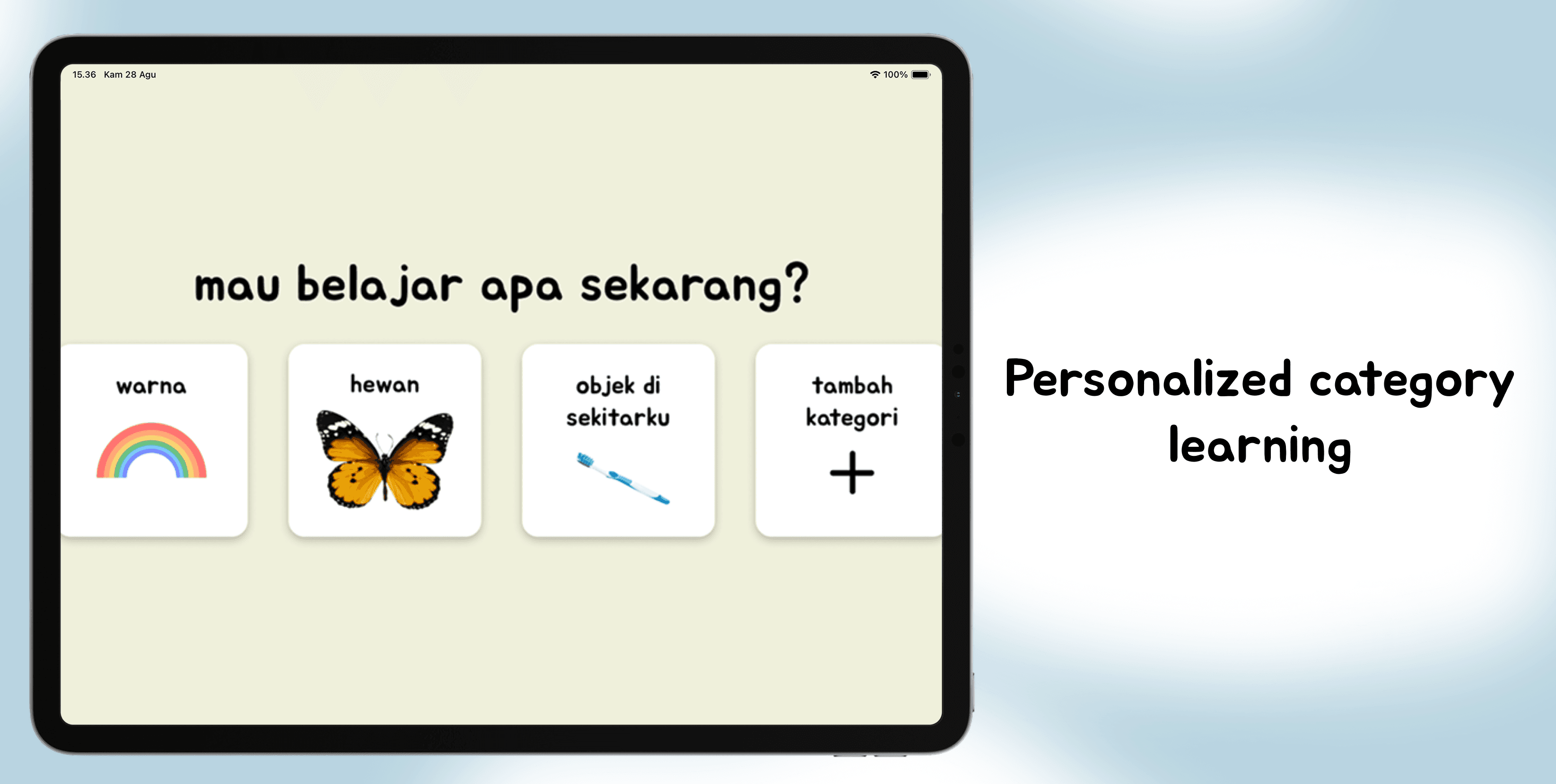
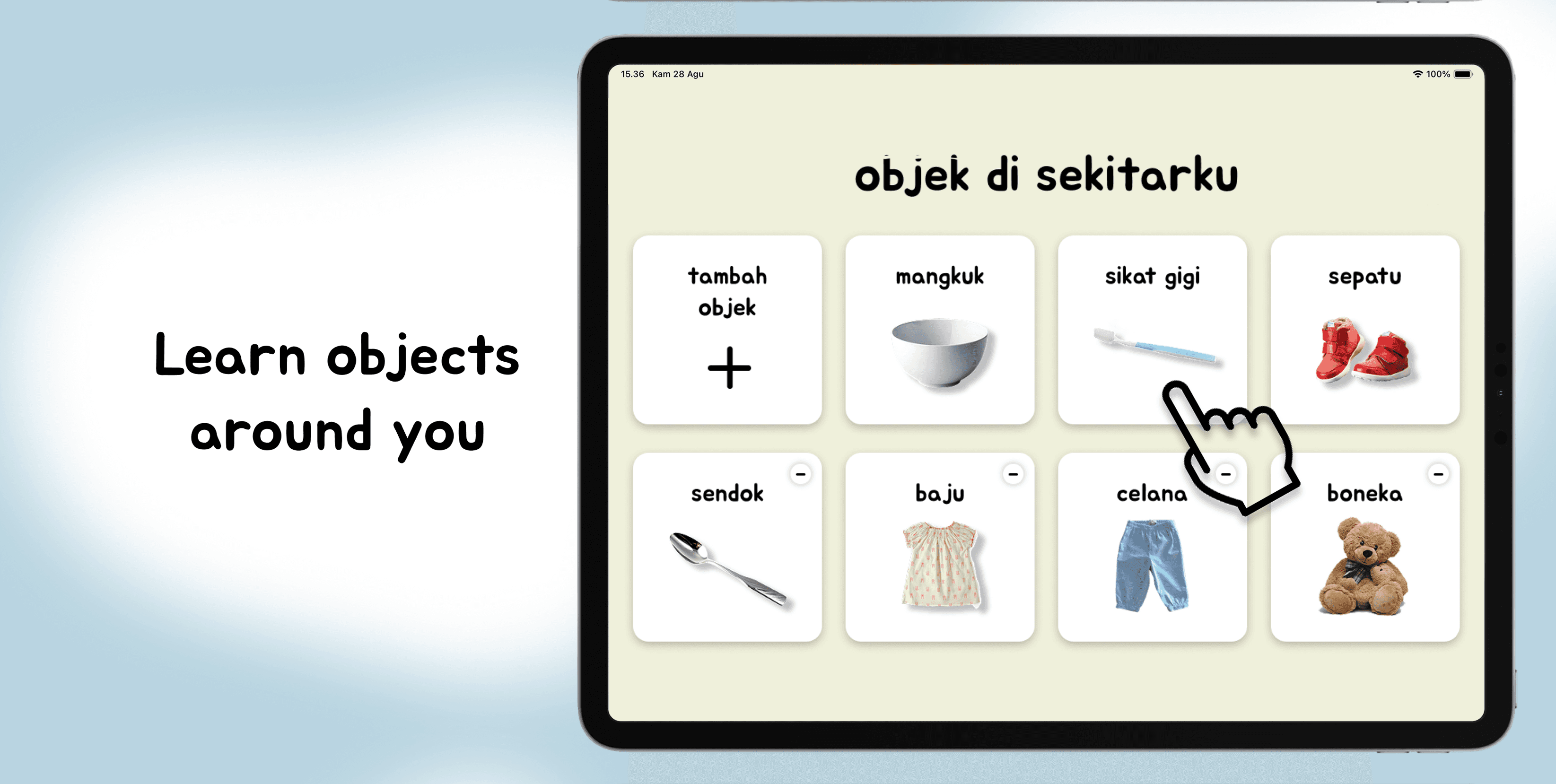
Beo.id is a vocabulary learning application designed specifically for preschoolers (aged 4+) with mild to moderate nonverbal autism. Inspired by the caRE&reACH community, this project addresses a critical gap: the lack of accessible, Indonesian-language learning tools for neurodivergent children.
The name "Beo" (the Indonesian word for Parrot) symbolizes the app's mission. Just as a parrot mimics human speech, Beo.id encourages children to recognize, name, and eventually articulate words—providing them with the essential building blocks to express their thoughts and connect with the world.
The challenge
Creating a solution for autism requires navigating deep complexities and emotional nuances:
The "One-Size-Fits-All" Dilemma: Autism is a broad spectrum. Without direct ethnographic research (face-to-face observation) due to constraints, defining a single solution that caters to the unique needs of every child was our greatest hurdle.
Navigating Emotional Sensitivity: Conducting interviews with parents and experts required extreme care. I learned that research isn't just about finding quick fixes; it’s about understanding deep-seated pain points while respecting the emotional vulnerabilities of the participants.
Expert & Resource Scarcity: A limited pool of available specialists and a lack of Indonesian-specific learning frameworks forced us to be highly resourceful and intentional with our data gathering.
Design Trade-offs vs. Deadlines: Operating within a 6-week timeline, I had to make difficult executive decisions—specifically, prioritizing the implementation of the core flow in Xcode over further UI iterations to ensure a functional deliverable.

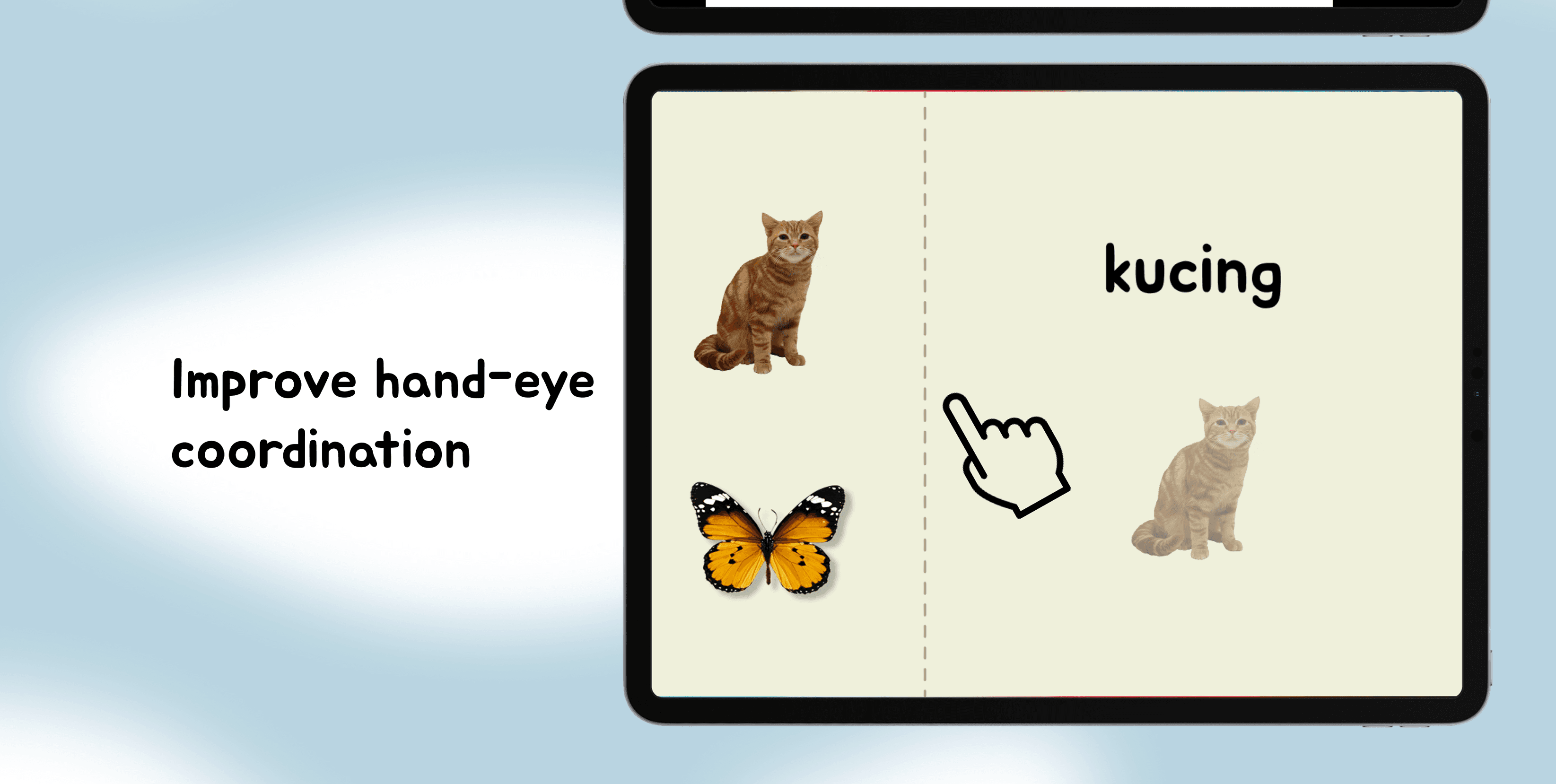
Result
The project resulted in an iPadOS app that serves as a bridge between parents, educators, and children. More importantly, it served as a significant milestone in my professional growth:
From "How" to "Why": I evolved my interviewing technique from asking solution-oriented "how-to" questions to uncovering the "thinking process" and root problems that participants might not even realize they have.
Systemic Thinking: I gained a deeper understanding of the developmental hierarchy—recognizing that learning skills are built upon sensory and motor foundations that technology must respect.
Growth Mindset: This retrospective reminds me that while time constraints are real, a designer’s responsibility is to remain empathetic and rigorous. I’ve learned to embrace "reverse questioning" and deep-diving into problems rather than rushing toward surface-level answers.
Testimonial
Incredible. It has been so helpful to see my child navigate the app and use it on his own, without any guidance."
Ivi Barata
Parent of 12-year-old user